
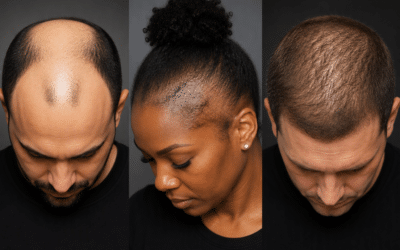
Scalp Micropigmentation for Black Women With Alopecia: Can SMP Help?
Can scalp micropigmentation help Black women with alopecia? Learn how SMP can reduce visible scalp and create the appearance of density for thinning edges, traction alopecia, crown thinning, and other patterns of hair loss.
Reading Time:
Published On
September 22, 2026
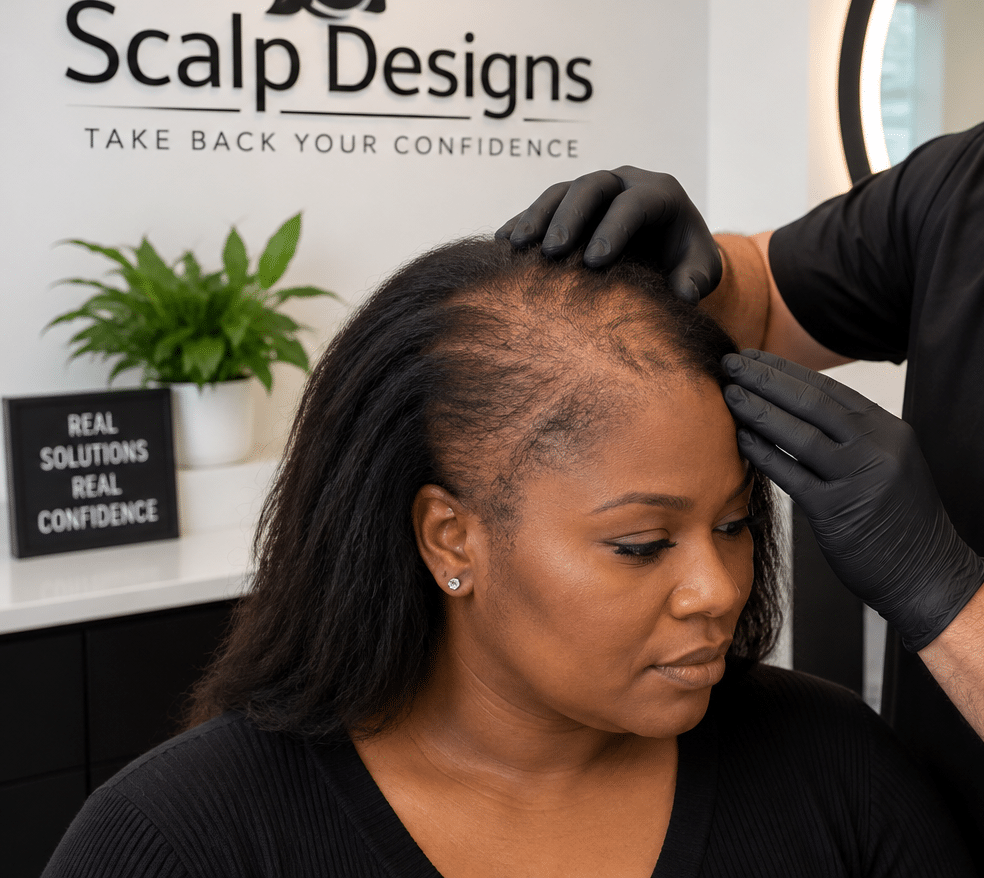
Alopecia Looks Different for Every Woman
Hair loss in Black women can appear in many different ways, including thinning edges, loss around the temples, widening areas of visible scalp, crown thinning, and permanent hair loss from conditions such as traction alopecia or scarring alopecia. SMP is not a one-size-fits-all treatment. The right approach depends on where the hair loss is occurring, how much natural hair remains, and the look you want to achieve.
SMP Can Camouflage the Appearance of Hair Loss
Scalp micropigmentation does not treat the underlying cause of alopecia or make inactive follicles grow. Instead, SMP places carefully matched follicular impressions into areas where hair has been lost or become thin. By reducing the contrast between the hair and visible scalp, thinning areas can appear fuller and more evenly covered.
Why SMP Can Work Well for Black Women
Many Black women experiencing alopecia still have substantial natural hair surrounding the thinning areas. SMP can be placed between the existing follicles to reduce visible scalp without requiring the hair to be shaved. The goal is not to replace the appearance of longer hair strands, but to create a subtle foundation of density underneath the existing hair.
The Consultation Matters
Before treatment, the scalp and pattern of hair loss should be carefully evaluated. With alopecia, it is especially important to understand whether the hair loss is stable, whether the scalp is healthy enough for treatment, and what SMP can realistically accomplish. If the hair loss appears active or there are concerns about the scalp, medical evaluation may be recommended before moving forward with SMP.
Introduction
Alopecia can affect Black women in many different ways. For some, it begins with thinning around the edges or temples. For others, hair loss develops at the crown, along the part, or in areas that have been affected by years of tension, styling, or scarring. When hair does not fully return, the contrast between the remaining hair and visible scalp can become increasingly noticeable. Scalp micropigmentation can help camouflage these areas by creating the appearance of tiny hair follicles throughout the scalp. The goal is to work with the natural hair that remains, reduce visible scalp, and create the appearance of greater density without requiring most women to shave their existing hair.
Can scalp micropigmentation really help Black women with alopecia?
In many cases, yes. SMP can be especially effective when alopecia has left areas of visible scalp surrounded by existing hair. The result depends on the type and pattern of hair loss, the condition of the scalp, how much natural hair remains, and what the client expects SMP to achieve.
What Types of Alopecia Can SMP Help Camouflage?
SMP can be used to improve the appearance of several different patterns of hair loss, but the approach depends on the individual. Black women may experience thinning from traction alopecia, pattern hair loss, scarring alopecia such as CCCA, or other causes of permanent hair loss. When the scalp is healthy and the hair loss is stable, carefully placed SMP impressions can reduce the contrast between the scalp and surrounding hair, making thinning areas appear less noticeable and more densely covered.
Common Hair Loss Patterns SMP Can Help Camouflage
Traction Alopecia — SMP can reduce the appearance of hair loss around the edges, temples, and other areas affected by repeated tension from hairstyles.
Thinning Edges & Temples — Follicular impressions can be blended with existing hair to make sparse areas appear more densely covered.
Crown & CCCA-Related Hair Loss — When the condition is stable and the scalp is suitable for treatment, SMP may help camouflage areas of permanent hair loss and visible scalp.
Female Pattern & Diffuse Thinning — SMP can be placed between existing follicles to reduce scalp visibility and create the appearance of greater overall density.
What SMP Cannot Do for Alopecia
SMP does not treat the underlying cause of alopecia. It is a cosmetic treatment designed to improve the appearance of hair loss.
SMP does not create actual hair strands. It creates the appearance of follicles at scalp level and works best when those impressions can blend naturally with the surrounding hair.
SMP does not stop future hair loss. If alopecia is still progressing, the treatment plan may need to account for additional changes in the hair-loss pattern.
Not every scalp should be treated immediately. Active inflammation, irritation, or an uncertain hair-loss condition may need to be evaluated by a medical professional before SMP is considered.
Common Myth
“SMP only works if you shave your head.”
Many people assume SMP requires the entire head to be shaved in order to look natural.
FACT: You Do Not Have to Shave Your Hair for SMP
Black women with alopecia do not necessarily need to shave their hair for SMP. When enough natural hair remains, SMP can be placed between and beneath existing hair to reduce visible scalp and create the appearance of greater density. This can be especially effective for thinning edges, temples, parts, and certain areas of crown thinning.
The Key to Natural SMP Results for Alopecia
The goal of SMP for alopecia is not to make the scalp darker or simply fill every area with pigment. The follicular impressions need to blend naturally with the client’s existing hair, skin tone, and pattern of hair loss. For Black women who keep their hair longer, SMP is typically used to reduce the contrast of visible scalp underneath the natural hair. The amount of remaining hair, location of the hair loss, scalp condition, and hairstyle all help determine how much improvement SMP can realistically provide.
Can I Keep My Hair and Still Have SMP?
Yes. Many Black women who receive SMP for alopecia or thinning hair continue wearing their natural hair at its normal length. When enough hair remains, SMP can be carefully placed underneath and between the existing follicles to reduce the amount of visible scalp. This can be especially effective around thinning edges and temples, along the part, and in certain areas of crown thinning. The goal is for the SMP to act as a subtle background of follicular density while your natural hair remains the main focus.
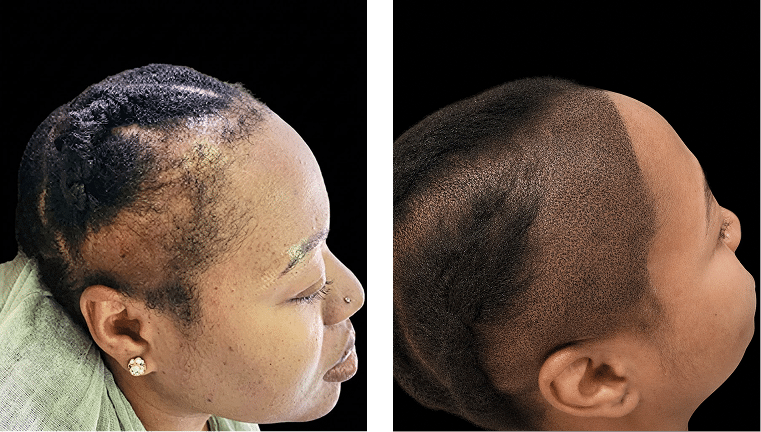
Why Thinning Edges and Temples Are Common Concerns
The edges and temples are common areas of concern for Black women experiencing hair loss, particularly after years of hairstyles that place repeated tension on the hair. When follicles in these areas have been permanently damaged, the contrast between the bare scalp and surrounding hair can make the hair loss especially noticeable. SMP can recreate the appearance of follicles within these areas, helping soften that contrast and allowing the thinning edges to blend more naturally with the surrounding hair.
SMP for Crown Thinning and CCCA
Hair loss at the crown can be particularly noticeable because the scalp may become visible through the surrounding hair. CCCA is one condition that can cause progressive hair loss and scarring in this area. SMP may help camouflage the appearance of permanent crown hair loss by reducing the contrast between the scalp and existing hair. Because CCCA can be progressive, SMP should only be considered when the scalp is healthy and the condition has been properly evaluated and is stable.
What Happens During an Alopecia SMP Consultation?
The consultation is especially important when treating alopecia. At Scalp Designs, we look at the location and pattern of hair loss, the condition of the scalp, the amount of natural hair remaining, and how you normally wear your hair. We also discuss your history of hair loss and what you realistically want SMP to accomplish. From there, we can determine whether SMP is appropriate and how the treatment can be designed to blend naturally with your existing hair.
What Does the SMP Treatment Process Look Like?
Alopecia SMP is typically built gradually over multiple sessions. At Scalp Designs, most treatments are completed in three sessions, allowing the follicular impressions to be layered carefully and adjusted as the scalp heals. The first session establishes a light foundation, while later sessions build density and refine the blend with the surrounding natural hair. This gradual approach is especially important when working with thinning areas because the goal is a subtle, natural transition rather than an overly dark or artificial appearance.
Healing and Maintaining Your SMP Results
After each session, the treated area needs time to heal and the pigment will gradually settle into a softer, more natural appearance. Long-term scalp care is also important. Keeping the scalp moisturized and protecting it from excessive sun exposure can help maintain the appearance of your SMP. Over time, the contrast may gradually soften, and a future touch-up can refresh areas when needed.
What to Expect While Your Scalp Heals
During the healing period, the treated areas may initially appear darker before gradually softening. Mild redness or sensitivity can occur after treatment. As the scalp heals, the follicular impressions begin to settle and blend more naturally with the surrounding hair. Following the aftercare instructions and avoiding unnecessary irritation to the treated areas helps support proper healing.
What Healed SMP Should Look Like
Once fully healed, SMP should appear softer and more natural than it did immediately after treatment. The follicular impressions are designed to blend into the surrounding hair and reduce the contrast of visible scalp. For women with alopecia, the goal is subtle density that supports the appearance of the existing hair—not an area that looks overly dark or artificial.
When SMP Should Wait
If your alopecia appears to be actively progressing, or the scalp shows inflammation, irritation, tenderness, or other changes, SMP may need to wait. Because some forms of alopecia can involve an underlying medical condition or permanent scarring, it is important to make sure the scalp is stable and suitable for treatment. When appropriate, we may recommend that you speak with a dermatologist before moving forward with SMP.
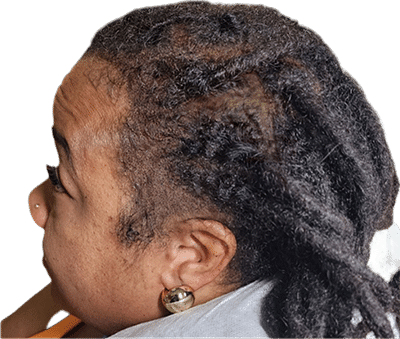
Real SMP Results for Women With Alopecia and Thinning Hair
Before SMP: Visible Hair Loss From Alopecia
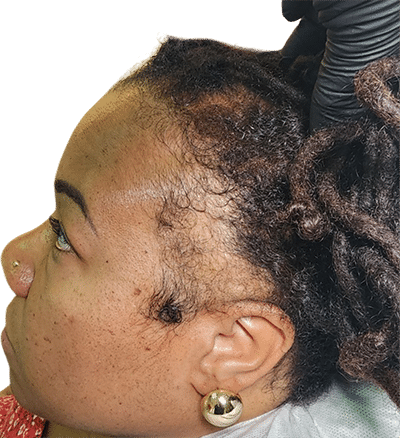
Before SMP: Visible Hair Loss From Alopecia After SMP: Reduced Scalp Visibility and the Appearance of Greater Density
Frequently Asked Questions About SMP for Black Women With Alopecia
Can scalp micropigmentation help traction alopecia?
Yes, in many cases SMP can help camouflage areas affected by traction alopecia, particularly around the edges and temples. Follicular impressions are placed within the areas of hair loss to reduce the contrast between the scalp and surrounding hair. The scalp should be healthy and the hair loss stable before treatment.
Do Black women have to shave their hair for SMP?
No. Many Black women receiving SMP for alopecia or thinning hair keep their existing hair at its normal length. When enough natural hair remains, SMP can be placed underneath and between the existing hair to reduce visible scalp and create the appearance of greater density.
Can SMP help with CCCA hair loss?
SMP may help camouflage areas of permanent hair loss caused by CCCA by reducing the contrast between the scalp and surrounding hair. Because CCCA is a scarring condition that can progress, the condition should be medically evaluated and stable before SMP is performed.
Can SMP help thinning edges and temples?
Yes. Thinning edges and temples are common areas where SMP can be used to create the appearance of additional follicular density. The pigment is carefully blended with the surrounding natural follicles to reduce visible scalp while maintaining a soft, natural-looking transition.
How many SMP sessions are needed for alopecia?
Most SMP treatments at Scalp Designs are completed over three sessions. Building the treatment gradually allows us to see how the scalp heals, layer the follicular impressions naturally, and adjust the density and blending as needed. The exact treatment plan can vary depending on the size and pattern of the hair loss.
About the Author

John Toti
With over 12 years of experience and thousands of successful procedures, John is a recognized expert in scalp micropigmentation. His mission is to educate, raise industry standards, and help every client feel confident again.
Related Educational Guides
How Long Does Scalp Micropigmentation Last?
Understanding SMP Longevity, Fading, and Proper Maintenance Reading time: 12–15 minutes Scalp micropigmentation is a long-lasting hair-loss solution, but maintaining healthy skin plays an important role in keeping your results looking sharp. Learn what causes SMP to...
Why Professional Scalp Micropigmentation Uses Dots Instead of Lines
Ready to take the next step?
Book a free consultation with John to discuss your goals and create a personalized treatment plan.
Table of Contents
 Latest Learning Center Guides
Will Scalp Micropigmentation Help My Hair Loss?
How Long Does Scalp Micropigmentation Last?
Understanding SMP Longevity, Fading, and Proper Maintenance Reading time: 12–15 minutes Scalp micropigmentation is a long-lasting hair-loss solution, but maintaining healthy skin plays an important role in keeping your results looking sharp. Learn what causes SMP to...
Why Professional Scalp Micropigmentation Uses Dots Instead of Lines
Categories
Need Help Deciding?
Book a free consultation to discuss your goals and find the right approach for you.