Scalp Micropigmentation for African American Women in Boston, Milton, Quincy & Dorchester
For many African American women, hair loss is not a small cosmetic issue. It affects confidence, styling choices, daily routines, and the way you feel when you look in the mirror. Whether it shows up as thinning edges, temple recession, a widening part, crown thinning, or overall scalp show-through, it becomes something you think about constantly. You start adjusting hairstyles to hide it. You depend on powders, fibers, edge fillers, extensions, or wigs just to feel comfortable. You worry about bright lighting, sweat, humidity, water, and whether the areas you are trying to hide are showing through.
At Scalp Designs in Milton, Massachusetts, we have spent years working with women throughout Boston, Quincy, Dorchester, Mattapan, Randolph, Brockton, Cambridge, and the surrounding Greater Boston area who are dealing with these exact issues. Over time, one thing became clear: scalp micropigmentation for African American women in Boston is one of the most overlooked hair loss solutions in Greater Boston, even though it can be life-changing when done correctly.
That realization is a major reason why we created a dedicated page and stronger awareness around scalp micropigmentation for Black women in Boston, Milton, Quincy, and Dorchester. Women deserve to know there is a real option available right here in the Greater Boston area—one that can help rebuild the look of thinning edges, fill in sparse sides, camouflage crown thinning, and restore confidence without depending on temporary cover-up products every day.
Why Greater Boston’s Haitian and Black Communities Made This Service So Important to Scalp Designs
Scalp Designs is located in Milton, Massachusetts, just outside Boston, in a part of Greater Boston surrounded by strong Black, African American, Haitian, and Caribbean communities including Dorchester, Mattapan, Hyde Park, Randolph, Brockton, and Quincy. Over the years, that location has played a major role in shaping the kind of scalp micropigmentation work we do and the people we have been able to help.
As more women from these communities came through our doors, one thing became very clear: hair loss in Black women was not being talked about enough, and many women had no idea that scalp micropigmentation for African American women was even an option.
A large number of the women we worked with were dealing with issues like thinning edges, temple recession, traction alopecia, widening parts, crown thinning, and visible scalp show-through. Some had spent years covering those areas with hair fibers, powders, edge products, strategic hairstyles, extensions, or wigs. Others had simply learned to live with it because they did not realize there was a realistic, non-surgical solution available nearby.
Being based in Greater Boston, in an area with a significant population of Haitian and Black women, gave Scalp Designs a front-row view of how common these concerns really were—and how personal they were. We were not seeing one isolated case here and there. We were seeing a real need in our own community.
For many Black women, hair loss is not just a cosmetic inconvenience. It can affect confidence, self-image, femininity, and everyday comfort. It can change how someone styles their hair, whether they feel comfortable in bright lighting, whether they avoid water, sweating, or the gym because of cover-up products, or whether they feel forced to depend on wigs and concealers every day just to feel put together.
That is exactly what happened at Scalp Designs. Over time, we saw how effective scalp micropigmentation for Black women in Boston could be when it was done correctly, and that changed how seriously we viewed this side of the business.
What Is Scalp Micropigmentation for African American Women?
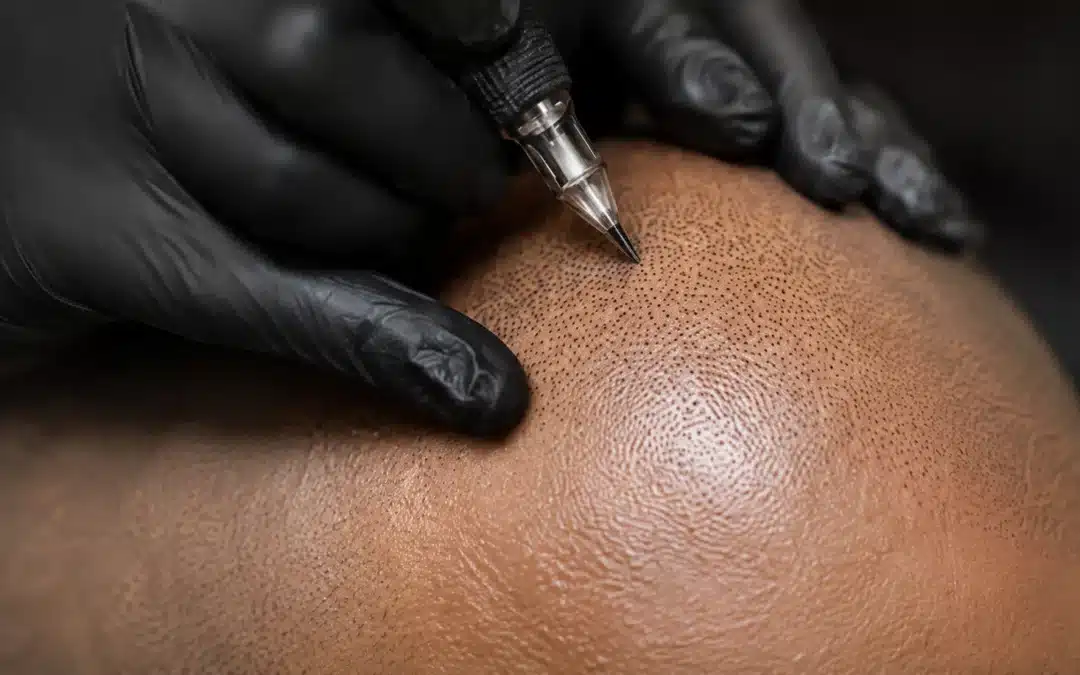
Scalp micropigmentation, or SMP, is a non-surgical cosmetic treatment that places tiny pigment impressions into the scalp to reduce the contrast between the scalp and the hair. For women, the goal is usually not a shaved-head look. The goal is to create the appearance of more density, stronger edges, a fuller crown, and less visible scalp.
For African American women, SMP is commonly used to improve the look of:
- thinning edges
- receding temples
- sparse or damaged hairlines
- crown thinning
- widening part lines
- traction alopecia
- patchy hair loss
- visible scalp show-through in longer hairstyles
- thinning from scarring or alopecia
When SMP is done correctly, it should blend naturally into your existing hair and skin tone so the result looks soft, realistic, and believable—not harsh, obvious, or overdone.
Common Hair Loss Concerns We Treat with Scalp Micropigmentation for Black Women in Boston, Milton, Quincy & Dorchester
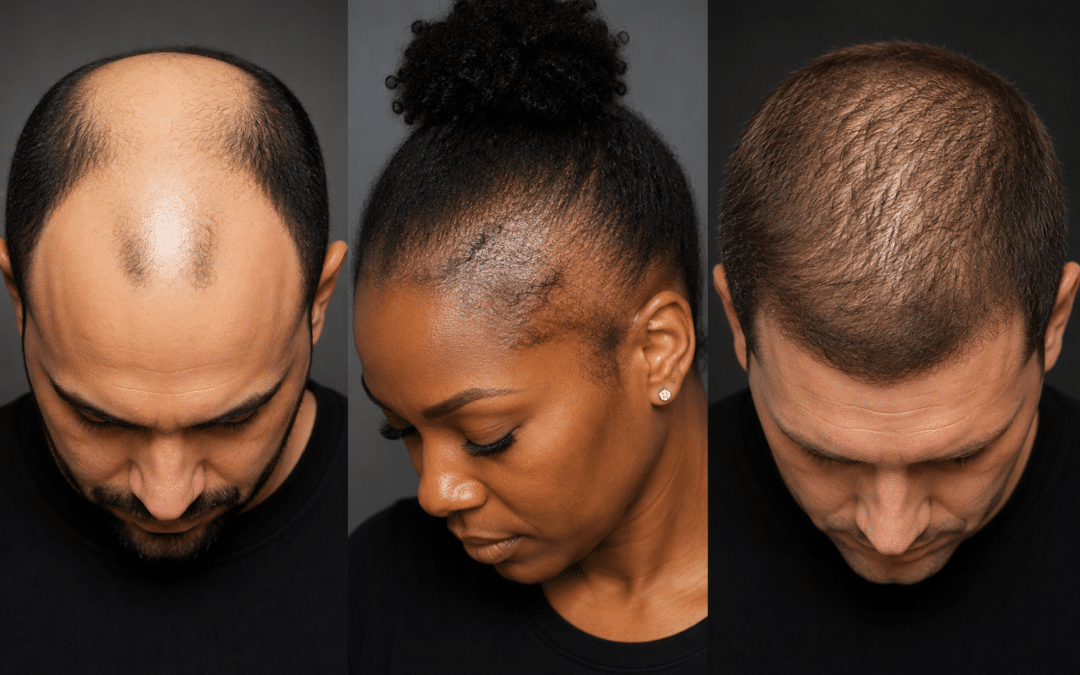
Hair loss in African American women is often very different from the male pattern baldness most people associate with scalp micropigmentation. Many Black women still have hair, still wear longer styles, and are not looking for a full shaved-head treatment. They are looking for a way to strengthen the areas that show the most scalp—especially the edges, temples, crown, and part line.
At Scalp Designs, women from Boston, Milton, Quincy, Dorchester, Mattapan, Brockton, Randolph, and nearby areas commonly come in for SMP because they are dealing with:
Thinning Edges from Traction Alopecia
This is one of the biggest reasons women seek scalp micropigmentation in Boston. Tight braids, weaves, ponytails, glued units, lace fronts, and years of tension can gradually thin or erase the edges. SMP can help restore the appearance of a stronger perimeter and reduce the contrast of exposed scalp.
Crown Thinning and Scalp Show-Through
Some women still have good length and decent overall coverage, but the crown shows too much scalp in bright light or from certain angles. SMP can help create the appearance of fuller density in that area.
Widening Part Lines
A part line that keeps getting wider can make the entire top of the hair look thinner. SMP can soften that visual gap and make the part appear less sparse.
Temple Recession and Hairline Loss
Many African American women experience thinning at the temples or front corners before other areas become noticeable. Hairline restoration for Black women with SMP can help rebuild a softer, fuller frame around the face.
Hair Loss from Alopecia or Scarring
Some women come in with patchy areas from alopecia, scalp scarring, or chronic thinning that does not respond to products. In the right case, SMP can help camouflage these areas and create a more even look.
Why Scalp Micropigmentation for Black Women Requires a Different Skill Set
This is where a lot of clinics get it wrong.
Scalp micropigmentation for African American women is not the same as SMP for a bald man. The density patterns are different. The hairline design is different. The treatment goals are different. The technique has to be more controlled, more layered, and more natural.
At Scalp Designs, female SMP is approached differently because African American women often want to:
- keep their hair longer
- wear their hair natural, straightened, braided, or under wigs
- restore thinning edges without creating a harsh line
- improve density without looking like they had cosmetic work done
- camouflage visible scalp in a way that still looks feminine and soft
That requires a treatment built around female hair loss patterns, not a generic SMP formula.
How Seeing Women Return Years Later for Touch-Ups Showed Us How Life-Changing SMP Can Be
One of the biggest reasons Scalp Designs became so passionate about scalp micropigmentation for Black women in Greater Boston was not just what we saw during treatment—it was what we saw years later.
Over time, we have worked with hundreds of women dealing with different forms of hair loss, from thinning edges and traction alopecia to crown thinning, temple recession, widening parts, and overall scalp show-through. Like anyone considering SMP for the first time, many of these women initially came in focused on one thing: fixing the visible problem. They wanted their edges to look fuller, their sides to stop looking thin, or their crown to stop showing scalp in bright light. They wanted to feel more comfortable with their appearance again.
But what stood out to us was what happened after treatment—especially when those same women returned years later for a maintenance touch-up.
By that point, the conversation was often very different. Instead of only talking about the thinning areas that had bothered them, many women would talk about how much easier life had become once they no longer felt like they were constantly dealing with hair loss. They talked about not having to fight with powders and fibers every morning. They talked about not stressing over whether a wig looked natural in certain lighting, or whether thinning edges were showing through in photos. They talked about going to the gym, being out in the heat, getting caught in the rain, or simply moving through daily life without worrying that a temporary cover-up was going to shift, smear, or wash off.
That is when you realize scalp micropigmentation for African American women is about much more than just appearance. For many of the women we have worked with, SMP has changed the way they carry themselves, how they style their hair, and how much mental energy they spend trying to hide thinning areas.
Why Many Women in Boston, Milton, Quincy, and Dorchester Choose SMP Over Temporary Cover-Ups
A lot of women who come to Scalp Designs have already tried to manage hair loss every way they know how. They have used topical hair fibers, powders, edge products, cover-up sprays, wigs, extensions, scarves, and strategic hairstyles just to get through the day feeling comfortable. And while those options can absolutely help, they are still temporary solutions.
SMP creates the appearance of fuller density directly at the scalp level. Instead of masking the problem for a few hours, it addresses visible scalp show-through in a way that stays with you day to day. Once treatment is complete, women are no longer worrying about whether fibers are going to rub off on their hands, streak down their forehead in the heat, or wash away in the pool. They are no longer planning their workouts around hair loss concealers or avoiding certain hairstyles because the scalp is too visible in specific areas.
Hair powders and fibers can be messy. Wigs can absolutely be a great option for some women, but they are not always comfortable—especially in hot weather, during workouts, or for women who simply do not want to feel dependent on them every day. Many women do not want their confidence tied to whether they remembered to apply a product or whether a wig is sitting exactly right.
Scalp micropigmentation gives many women something different: a long-term cosmetic foundation that stays in place. That means you can go to the gym, swim, sweat, travel, shower, and live your life without constantly worrying about what is happening on your scalp.
In some cases, Scalp Designs even works with women who want their entire scalp filled for density. This can be especially helpful for women who want more flexibility with shorter styles, extensions, units, or wigs. After SMP treatment, many of those women find that they can wear those styles differently because they are no longer trying to hide obvious scalp underneath.
The Most Common Areas We Treat for Black Women at Scalp Designs
At our Milton SMP studio near Boston, the most common treatment areas for African American women include:
Edges and Temples
This is one of the biggest requests we get from women traveling from Boston, Quincy, Dorchester, Mattapan, and Randolph. Restoring the appearance of the perimeter can dramatically improve how the face is framed.
Crown Density
If the crown opens up under bright light or shows too much scalp, SMP can reduce that contrast and create the illusion of fuller density.
Part Line Density
A widening part can make the top of the hair look much thinner than it really is. SMP can help soften that gap.
Side Density
Some women lose density through the sides while keeping length elsewhere. This can be a strong cosmetic use for SMP.
Patch or Scar Camouflage
When there is a specific section where scalp shows through more heavily, SMP can often be used to blend that area with the rest of the hair.
What to Expect From the SMP Process
Most clients complete treatment in 3 sessions.
Session 1: Build the Foundation
The first session creates the initial layer of density. We start conservatively and establish the treatment area without overloading the scalp.
Session 2: Increase Density and Depth
Once the first session heals, the second session adds more visible fullness and helps the treatment blend more completely with the surrounding hair.
Session 3: Refine and Finalize
The final session fine-tunes the shape, density, and overall balance so the result looks complete and natural.
Spacing the sessions out matters. It gives the scalp time to heal and allows the treatment to be built the right way instead of forcing a heavy result all at once.
Will I Need to Shave My Head?
No. In most female density cases, you do not need to shave your head.
This is one of the biggest misconceptions women have when they first look into SMP. For African American women with thinning edges, crown loss, or density issues, the treatment is usually designed to work with your existing hair. The goal is to reduce scalp visibility—not take away your hairstyle.
Why African American Women in Greater Boston Choose Scalp Designs
Women come to Scalp Designs because they want more than a generic answer to hair loss. They want someone who understands that African American women’s hair loss patterns, styling habits, and cosmetic goals are different.
At Scalp Designs, we regularly work with women who are dealing with:
- traction alopecia
- thinning edges
- temple recession
- crown thinning
- part line widening
- visible scalp show-through
- scarring
- alopecia-related thinning
- density loss while keeping longer hair
Our studio is located in Milton, Massachusetts, and we serve clients from Boston, Quincy, Dorchester, Mattapan, Brockton, Randolph, Cambridge, and throughout Greater Boston. If you are searching for scalp micropigmentation for Black women in Boston, African American women’s SMP in Milton, SMP for thinning edges in Dorchester, or hairline restoration for Black women in Massachusetts, you are in the right place.
Frequently Asked Questions About Scalp Micropigmentation for African American Women
Can scalp micropigmentation help thinning edges in Black women?
Yes. One of the most common reasons African American women come to Scalp Designs is to improve the appearance of thinning edges and temple recession. SMP can help reduce scalp show-through and create the appearance of a stronger, fuller hairline.
Can scalp micropigmentation help traction alopecia?
In many cases, yes. Scalp micropigmentation can be a very effective cosmetic option for women dealing with traction alopecia, especially around the edges, temples, and sides. During a consultation, Scalp Designs will evaluate the area and determine whether SMP is the right fit.
Will I have to shave my head for women’s scalp micropigmentation?
No. In most female density cases, women do not need to shave their head. Scalp micropigmentation is often used to blend into existing hair and reduce the contrast of visible scalp while allowing women to keep their current hairstyle.
Is scalp micropigmentation permanent?
Scalp micropigmentation is considered a long-term cosmetic solution. It is designed to last for years, though most clients eventually come back for a maintenance touch-up to keep the result looking fresh.
Can I still wear wigs or extensions after scalp micropigmentation?
Yes. Many women continue wearing wigs, extensions, or protective styles after SMP. In fact, some women find these styles easier to wear because the scalp looks fuller underneath and there is less visible scalp show-through.
Can I work out, sweat, or swim after scalp micropigmentation?
Yes. Once your SMP treatment is healed, you can go to the gym, sweat, swim, shower, and return to normal activities without worrying about hair fibers or powders washing off.
What areas can scalp micropigmentation improve for African American women?
Scalp micropigmentation can be used to improve the appearance of thinning edges, temple recession, widening parts, crown thinning, side density loss, patchy scalp show-through, and certain scarred or alopecia-affected areas.
Where is Scalp Designs located?
Scalp Designs is located in Milton, Massachusetts and serves clients from Boston, Quincy, Dorchester, Mattapan, Randolph, Brockton, Cambridge, and surrounding Greater Boston areas.
Book a Private Consultation at Scalp Designs
If you are an African American woman in Boston, Milton, Quincy, Dorchester, Mattapan, Brockton, Randolph, or the surrounding Greater Boston area dealing with thinning edges, a widening part, crown thinning, traction alopecia, temple recession, or visible scalp show-through, scalp micropigmentation may be one of the most effective cosmetic solutions available.
At Scalp Designs in Milton, MA, every consultation is private and focused on your specific goals. We’ll look at the areas bothering you most, explain what can realistically be improved, and create a treatment plan based on your hairline, edges, crown, or density concerns.
If you’re ready to explore scalp micropigmentation for African American women near Boston, schedule a private consultation with Scalp Designs today.